Sanitary & Slip Resistant
Quartz Flooring Systems
Extreme Safety Grip
Double-Broadcast Quartz Protection
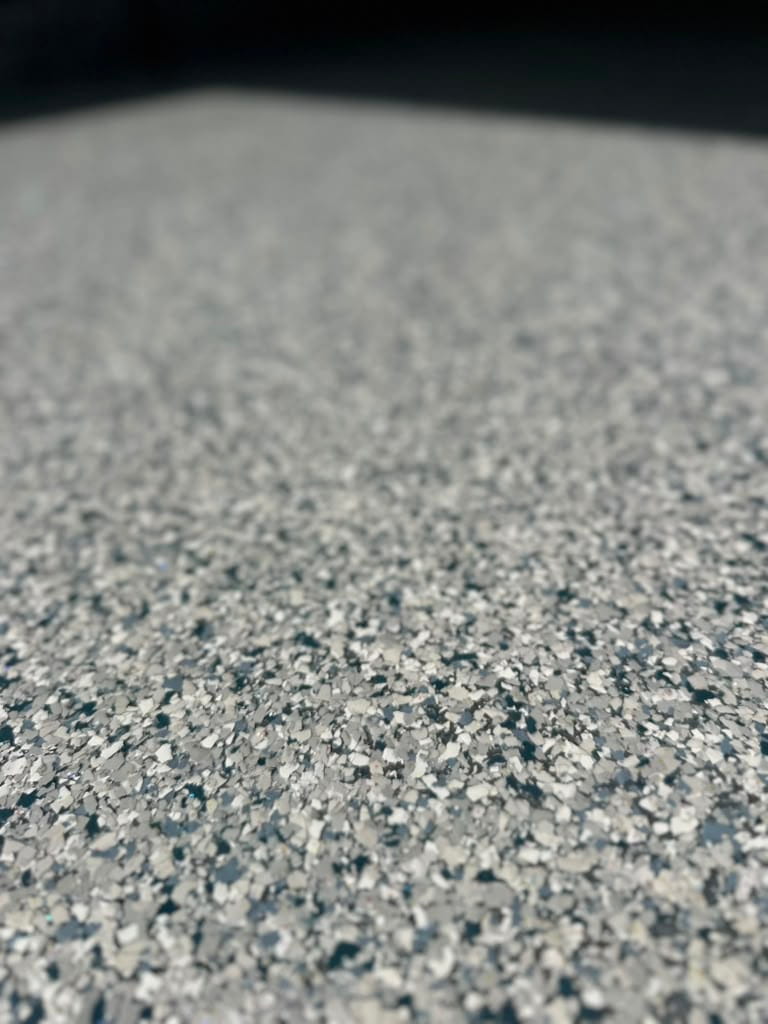
In facilities where water, grease, or chemical fluids are constantly on the floor, standard smooth epoxies become major slip hazards. Our Quartz Epoxy System solves this by broadcasting colored silica sand aggregate into a thick epoxy binder layer twice, creating a highly textured safety surface.
At Gotham Floor Systems, we build seamless, non-porous quartz flooring that meets strict USDA, FDA, and OSHA standards. Ideal for high-impact commercial areas exposed to heavy washdowns, steam, and industrial traffic.
Benefits of Quartz Flooring
Combining mechanical strength, chemical resistance, and slip protection, quartz systems offer the ultimate wet-area solution.
OSHA-Compliant Slip Defense
The structured quartz sand texture provides deep mechanical grip under wet, soapy, or oily conditions, minimizing slip-and-fall injuries.
Sanitary Cove Transitions
We can curve quartz flooring up the walls (integral cove base) to eliminate corners where bacteria, grime, and mold thrive, enabling easy sanitizing.
Thermal Shock Resilience
Engineered to withstand direct steam cleaning, commercial hot water washdowns, and rapid temperature changes in food processing coolers.
Quartz Systems
Double Broadcast (Heavy Duty)
Two separate saturations of quartz sand aggregate. Built for extreme foot traffic, chemical resistance, and industrial kitchens.
Single Broadcast (Medium Duty)
A single sand saturation layer. Offers a lighter slip-resistant texture perfect for residential garage pathways and light office spaces.
Quartz Cove Base (Sanitary)
Custom-troweled curve matching the floor color that runs up sheetrock or block walls. Creates a seamless, watertight bathtub-like seal.
Building the Quartz Layer
A long-lasting quartz system is constructed layer-by-layer. First, we diamond-grind the concrete and mend all cracks. Next, we roll out a high-solids epoxy primer. While the basecoat is wet, we broadcast colored ceramic-coated quartz sand to saturation (excess sand covers all wet resin). Once cured, we sweep up excess sand and lightly sand the rough points flat. We then apply a second layer of clear epoxy binder and repeat the broadcast process. Once the second layer cures, we apply two clear UV-stable topcoats to lock the quartz sand in, leaving a textured, watertight membrane.